
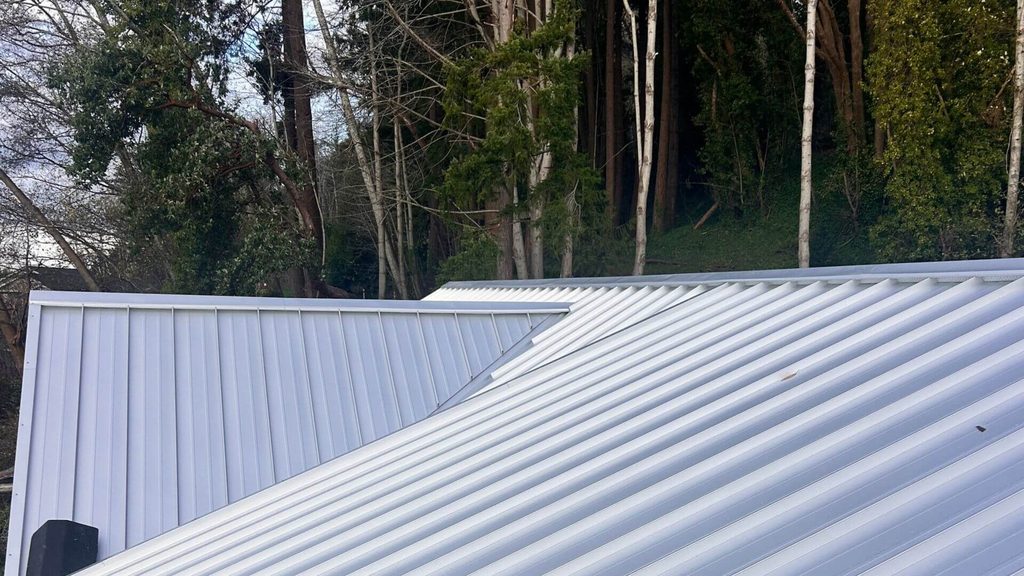
One roofing quote leaves your shingles in place. Another includes a complete tear-off.
How do you know which one makes sense for your home?
Sometimes, you can install a metal roof over shingles. But your existing roof, specific metal system, manufacturer requirements, and local building rules all need to support that approach.
Leaving the shingles beneath a new roof covering is called a roof recover, or roof-over. A tear-off removes the existing roofing to expose the roof deck—the wood sheathing beneath it.
Here’s what to confirm before accepting either proposal.
When Installing Metal Roofing Over Shingles May Make Sense
You can consider a metal roof-over when:
- The existing roof and all its layers, decking, and framing are dry and sound.
- The existing roof meets all the requirements for the metal roof system you’ll be using, including manufacturer instructions, structural support (for both the old and new roof), attachment, and local building rules—or when added supports or other components can bring it up to those requirements.
That’s why there’s not a one-size-fits-all answer.
Your contractor needs to establish how many roofing layers are present and assess the shingles, decking, and supporting framing. The review should address moisture, previous leaks, deterioration, and whether the new panels will have the support and attachment they require.
The roof’s slope matters, too. So do local wind and snow loads. A panel and attachment method that work on one house may be unsuitable for another.
When the conditions support recovering, keeping your shingles may reduce the costs and disruption that come with removing and disposing of the old roof.
Those benefits are worth evaluating, but only after the roof’s suitability has been established. An inspection from the driveway isn’t enough to make that decision.
When Should You Tear Off the Existing Shingles?
Tear-off is necessary when existing conditions or applicable requirements rule out recovering. It may also be the more prudent choice when important questions remain unresolved.
When removal is absolutely necessary
Wet or deteriorated materials that make the roof unsuitable for recovering need to be addressed. Damaged decking must be repaired or replaced, which requires access to the affected areas.
Removal is also necessary when the proposed installation can’t meet manufacturer or local requirements with the shingles in place. Existing layer counts can restrict recovering, so your contractor needs to check the rules that apply to your property.
Don’t accept an unresolved leak as something the new panels will automatically fix. The contractor should identify its source, assess any resulting damage, and explain the repair.
When tear-off may be the better decision
Removing the shingles exposes the deck for inspection and repair. That can be valuable when the roof has a history of leaks or its condition is difficult to establish.
Tear-off may also make it easier to correct an uneven surface or rebuild flashing around walls, chimneys, and other vulnerable connections.
Ask the contractor to explain the reason for removal and what they expect to find. The recommendation should connect to your roof’s condition and installation requirements.
What Needs to Go Between the Shingles and Metal Panels?
There’s no universal layer-by-layer recipe. The proposal needs to explain support, protective layers, and moisture control for the selected system.
Support and attachment
Existing shingles aren’t a structural fastening base. The new roof needs attachment to suitable decking or framing, as required by its design.
Furring strips—wood or metal supports beneath the panels—may be part of that design. They aren’t automatically required, and adding them doesn’t make every roof suitable for recovering. Their size, spacing, and attachment must suit the panel and project.
Our guide explains when metal roofs need furring strips.
Underlayment or separation layers
The quote should name the specified underlayment or separation material and show where it belongs. Underlayment provides secondary water protection. Other specified layers may separate materials or accommodate panel movement.
Review underlayment options for metal roofing, then confirm the specific requirements for your proposed assembly.
Moisture control and roof details
Furring strips alone don’t prevent condensation. Any ventilation cavity needs a planned airflow path. The design also needs to address air leakage, insulation, and moisture as appropriate for the house and climate.
Added roof height affects edges, walls, valleys, penetrations, and gutters. The proposal should account for those changes in its metal roof trim and flashing details.
Is Installing Metal Over Shingles Actually Cheaper?
It can be, but avoiding tear-off costs doesn’t tell you the final price.
A roof-over may reduce removal labor and disposal charges. It may also require added supports, different fasteners, revised flashing, repairs, or engineering. Those costs belong in the comparison.
Ask for complete proposals using the same panel, metal thickness, and finish. Compare the support system, underlayment, flashing, ventilation work, repair allowances, and warranty terms alongside the total.
If one quote leaves these items undefined, you don’t yet have enough information to judge its value. Our guide to how to compare metal roofing quotes explains the broader cost factors.
Five Questions to Ask Before Accepting a Roof-Over Quote
A complete proposal should answer these questions clearly:
- Which exact panel and roof-over assembly are proposed? Ask for the product name and supporting installation details. Start with Nu-Ray installation guides and panel specifications, then request clarification for conditions those documents don’t cover.
- How was the existing roof assessed? Confirm the layer count, inspection findings, leak history, and how concealed deck conditions were evaluated. Ask what remains unknown.
- How will attachment and protective layers work? The scope should explain the fastening base, any added supports, underlayment or separation materials, and moisture-control approach.
- What changes are included around roof connections? Look for flashing, edges, valleys, pipes, skylights, walls, gutters, and ventilation. Ask which existing components will stay and why.
- What happens if conditions change? Confirm permits, inspections, repair allowances, exclusions, and change-order pricing. Get the applicable manufacturer coverage and installer workmanship terms in writing.
Resolve missing answers before signing. They can change both the price and the recommended approach.
Metal Roofing Over Shingles FAQs
Can a standing seam metal roof be installed over shingles?
Sometimes, when the exact standing seam system and proposed roof-over assembly are suitable for the existing roof and meet applicable requirements. “Standing seam” describes a type of roofing; it doesn’t establish approval for keeping the shingles. Ask how the panels will be supported and attached, what installation details apply, and whether the manufacturer supports that specific use. A method used with another panel isn’t enough.
Can you install metal roofing over two layers of shingles?
Two existing layers can restrict or rule out recovering. Your contractor needs to verify the locally adopted requirements and whether any relevant provisions or exceptions apply to the proposed system. The roof’s condition and structural capacity still need evaluation even if a particular approach is permitted. Ask for the basis of the recommendation in writing rather than accepting a general claim that metal can always go over shingles.
Will installing metal roofing over shingles affect the warranty?
It may. Coverage depends on the product, installation method, and written terms. A manufacturer’s material or finish warranty covers different issues from an installer’s workmanship warranty. For example, paint coverage doesn’t establish that installation-related leaks are covered. Before signing, confirm whether the proposed roof-over method is eligible for each applicable warranty, who provides the coverage, and what installation, registration, or maintenance requirements apply.
Confirm the System Before You Compare Quotes
Find a Nu-Ray dealer to discuss panel options and manufacturer requirements. Then have your installer or project designer evaluate the existing roof and proposed assembly. Before accepting a quote, confirm which materials will stay, how the new roof will attach, and how repairs and flashing will be handled.